Quick Answer
A buzzing refrigerator is usually a fan motor or the start relay. Buzzing at the back or bottom points to the condenser fan; buzzing inside the freezer points to the evaporator fan hitting ice; a short buzz every few minutes points to the start relay. A brief buzz after the door closes is normal.
Every fridge hums. Telling a normal hum from a buzz that means a part is straining starts not with guessing the cause but with working out where the sound comes from. Each area has its own short list of suspects.
First: Find Where the Buzz Is Coming From
Open the freezer door with the fridge running. If the buzz gets louder it is inside the freezer; if it barely changes it is at the back or bottom. Then note the pattern: constant, every few minutes, or only at the dispenser. That tells you almost everything.
5 Reasons a Refrigerator Buzzes
1 Buzzing From the Back or Bottom Start DIY
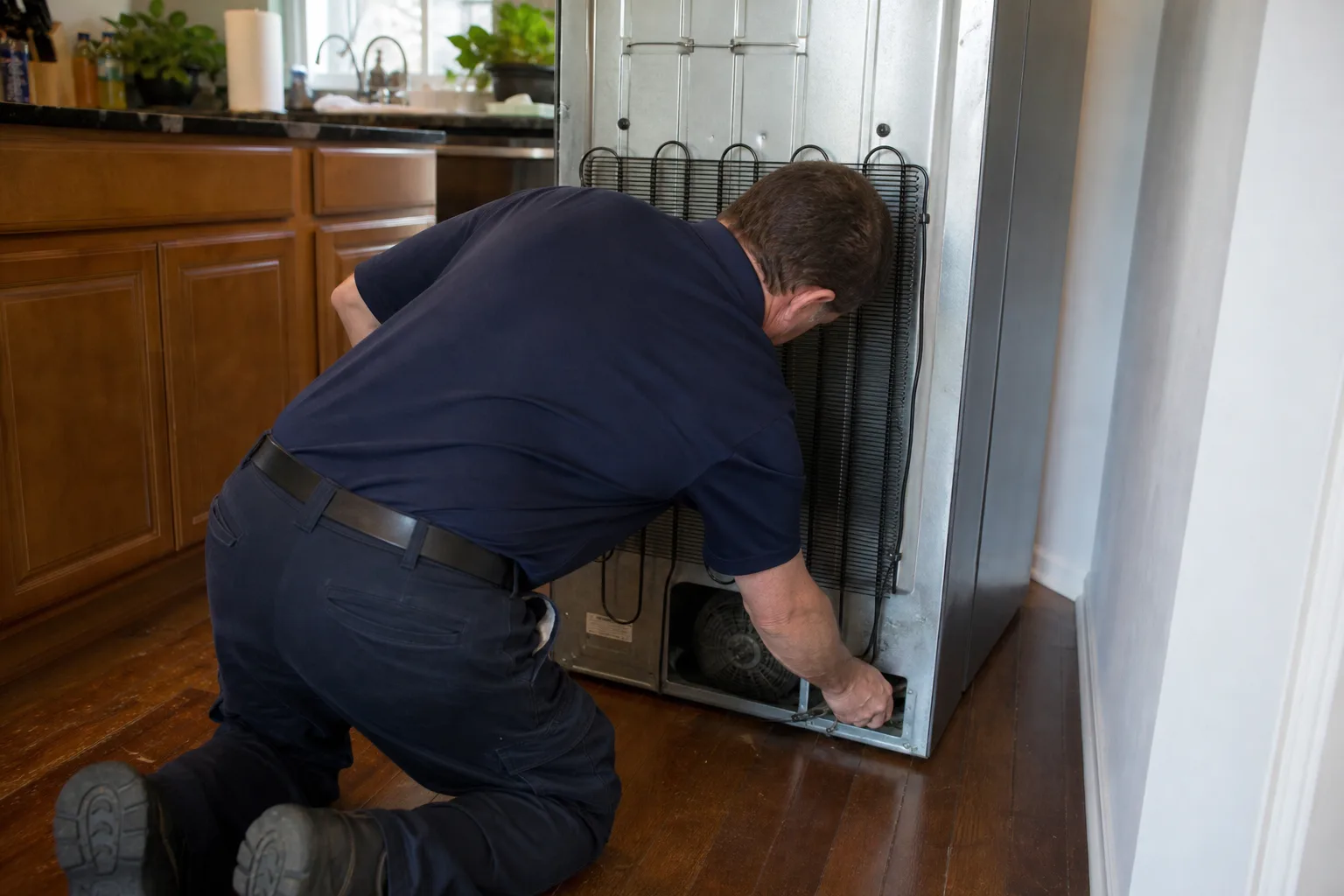
Behind or beneath the fridge sits the condenser fan motor, which pulls air across the coils to shed heat. It is the most common source of a buzz, for a boring reason: it lives at floor level in the dust.
What it sounds like: A low buzz or rattly hum, loudest behind the fridge, coming and going with the cooling cycle.
Try this first: Unplug the fridge, pull it out, remove the rear access panel and vacuum the coils and fan blade — a year of dust and pet hair makes the motor work against resistance. While it is out, confirm the fridge is level and not touching a wall or cabinet.
Not DIY: If the buzz survives a proper cleaning, the motor bearing is worn.
2 Buzzing From Inside the Freezer Maybe DIY
The evaporator fan motor sits behind the freezer's back panel and circulates cold air through both compartments. When the defrost system stops keeping up, frost builds around the housing and the blade clips it.
What it sounds like: A buzz or warbling whine that gets louder the moment you open the freezer door. Fluttering or chirping means the same thing.
What you can check: Empty the freezer and look at the back panel. Frost on the vents means the defrost side is failing — usually the defrost heater or timer. A full defrost (24 hours unplugged, doors open) clears the noise, but if the ice returns the part is still bad.
Not DIY: A buzz with no ice present means a worn fan bearing, which needs a meter to confirm.
3 Buzz, Click, Buzz Every Few Minutes Professional
This pattern is specific enough to be worth memorising. A short buzz, sometimes bracketed by a click, repeating every few minutes then going quiet, points at the start relay — the small component that brings the cooling cycle up to speed.
What it sounds like: Not a continuous hum — a few seconds of buzzing, silence for several minutes, then the same burst again. It sounds like the fridge trying to start and giving up.
Why not to wait: A relay behaving this way is on its way out, and the fridge usually stops holding temperature soon after. Food still cold means you caught it early.
4 Buzzing Tied to the Water or Ice Dispenser Maybe DIY
If the buzz only happens at the dispenser lever, or in short bursts a few times a day on a fridge with an ice maker, that is the water inlet valve. It buzzes when the pressure behind it is not what it expects.
What to check yourself: Trace the water line to the shutoff valve, usually under the sink, and make sure it is fully open — a half-turned valve is the most common cause. Then check the line for a kink and the filter date.
Not DIY: Full pressure, clear line, fresh filter, and it still buzzes? The valve itself is failing.
5 A Short Buzz Right After the Door Closes Normal
Worth knowing so you do not book a visit you do not need. The evaporator fan stops when you open the door and restarts when you close it, and on plenty of fridges that restart is audible — a brief buzz that settles into the usual hum.
Normal if it lasts a few seconds and the fridge is holding temperature. Not normal if it runs for minutes, gets louder over weeks, or comes with warming food.
Safe DIY Checks Before You Book
Stop and unplug if you smell burning plastic, the breaker trips, or the food is getting warm. Move perishables to a cooler and book a visit.
What a Buzzing Fridge Costs to Fix
| Where the Buzz Is | Likely Part | DIY? |
|---|---|---|
| Back or bottom, constant | Condenser fan motor | Clean first |
| Inside the freezer | Evaporator fan motor or defrost heater | Partly |
| Short bursts every few minutes | Start relay | No |
| Only at the dispenser | Water inlet valve | Partly |
| Brief buzz after the door closes | Fan restarting normally | No repair |
Refrigerator repairs typically run $150–$350 including parts and labour, depending on the part.
$89 Diagnostic — Waived with Repair. We identify which part is buzzing before anything gets replaced. $40 OFF any repair, limited time. Book online or call (437) 747-6737.
Frequently Asked Questions
Most buzzing comes from one of three parts. A buzz from the back or bottom is usually the condenser fan motor struggling against dust or a worn bearing. A buzz inside the freezer is usually the evaporator fan motor catching on ice. A short buzz every few minutes points to the start relay.
A steady low buzz is normal operating noise and is not dangerous. What matters is whether the fridge is still cold. A buzz combined with rising temperatures, a burning smell, or a breaker that keeps tripping is a stop-now situation: unplug the fridge and book a technician.
A short buzz, sometimes with a click, repeating every few minutes is the classic signature of a failing start relay: it tries to bring the cooling cycle up and drops out again. Left alone it usually ends with a fridge that stops getting cold, so book it before that happens.
That is the water inlet valve. It buzzes when it opens and does not get the pressure it expects, which usually means a shutoff valve is only partly open, the supply line is kinked, or a clogged filter is choking the flow. Check the shutoff and the filter date first.
Some of it. Vacuuming the condenser coils and fan area, levelling the fridge, checking the water shutoff and swapping an old filter are all safe homeowner jobs. Fan motors, the start relay and control board work need a certified technician with a meter.
Most buzzing repairs land between $150 and $350 including parts and labour, depending on which part is at fault. Our diagnostic fee is $89 and it is waived when you go ahead with the repair. We are also running $40 OFF any repair for a limited time.