Section
Key Takeaways
Four small jobs each season keep most appliances out of the repair queue: clean the dryer vent, vacuum the fridge condenser coils, clean the dishwasher filter, and run a tub-clean cycle in the washer. Each takes minutes, and together they prevent the majority of the breakdowns we are called out for.
- Spring: fridge coils, washer tub-clean, exterior dryer vent flap
- Summer: full dryer vent duct, fridge door seals, dishwasher filter
- Fall: oven and dishwasher deep-clean, lint trap housing, fridge water filter
- Winter: vent flap ice check, door gasket check, washer hose inspection
Nearly every task below protects one thing: airflow or drainage. Appliances rarely fail out of nowhere — they get choked slowly, work harder for the same result, and burn out a motor months later. It all applies to residential fridges, washers, dryers, dishwashers, and electric ovens.
Spring (March – May)
Spring is the reset after a GTA winter. Dust has been circulating for months, and the outside end of your dryer vent has just been through a full freeze-thaw cycle.
Spring Checklist
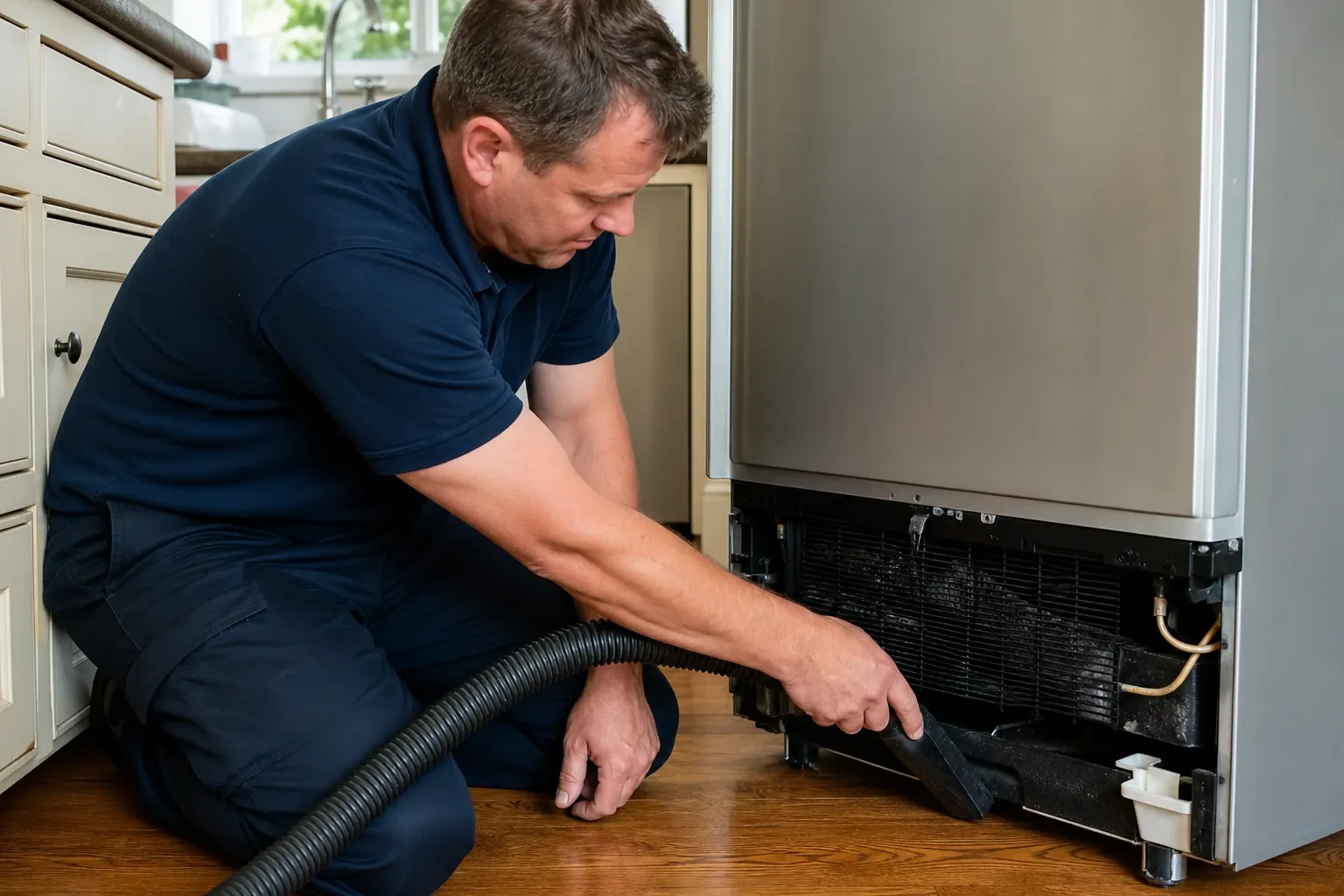
Fridge coils. A winter's worth of dust and pet hair packs into the condenser coils behind the toe-kick grille or on the back. Choked coils cannot shed heat, so the fridge runs longer and drifts warmer: cleaning refrigerator coils.
Washer tub-clean. Detergent residue and hard-water scale build up in the drum over winter — that is the musty smell. Run the tub-clean cycle, or follow how to descale a washing machine.
Exterior vent flap. Ice damage, packed leaves, and the occasional bird's nest are common by March. The flap should swing open freely when the dryer runs.
Summer (June – August)
Summer is peak laundry season — pool towels, beach gear, sports kit — and the heaviest loads of the year go through the dryer. Humid air and a hot kitchen also stress refrigerator door seals.
Summer Checklist
Dryer vent duct. The most valuable job on the list. Heavy towels shed enormous amounts of lint, and a restricted duct makes the dryer overheat and trip its thermal fuse — the classic "drum spins but no heat" call, and a fire risk. See cleaning a dryer vent and preventing dryer fires.
Fridge door gaskets. Close a dollar bill in the door and pull. If it slides out with almost no resistance, the seal is weak there — check several points on all four sides, and wash the gasket first.
Dishwasher filter. Twist it out, rinse it under the tap, and clear the spray arm holes: how to clean a dishwasher filter.
Fall (September – November)
Fall is the season worth being deliberate about. Your oven and dishwasher are about to do the hardest work of the year, and laundry moves indoors.
Fall Checklist
Clean the oven weeks ahead, not the night before. A self-cleaning cycle runs extremely hot and occasionally exposes a weak door lock or a tired thermal component. Do it in October and you find out with time to fix it.
Oven. Follow how to use a self-cleaning oven if your electric oven has the feature, or clean it manually instead.
Dishwasher. Clear the filter, then run an empty cleaning cycle to strip grease from the interior: dishwasher maintenance tips.
Dryer. Pull the lint screen right out and vacuum inside the housing it sits in — that cavity collects lint no one looks at.
Fridge water filter. If your fridge has a water or ice dispenser, most manufacturers specify a six-month change.
Winter (December – February)
Winter maintenance is about cold: ice at the vent hood, rubber that stiffens, and hoses that get brittle.
Winter Checklist
Iced vent flap. Warm moist air hitting a frozen flap can freeze it shut. The dryer then has nowhere to exhaust, overheats, and cuts its own heat. Check after heavy snowfall.
Door gaskets. Cold stiffens rubber. If your fridge or spare freezer lives in a garage or unheated basement, run the dollar-bill test again in January — a seal that passed in July can fail.
Washer hoses. Rubber supply hoses harden with age, and a burst hose floods a laundry room in minutes. Look for bulges, cracks, or rust at the couplings, and replace them every five years: washing machine maintenance.
The Year at a Glance
| Task | How Often | DIY or Pro |
|---|---|---|
| Dryer lint screen | Every load | DIY |
| Dryer vent duct (full length) | Every 6–12 months | DIY |
| Fridge condenser coils | Every 6 months | DIY |
| Dishwasher filter | Monthly | DIY |
| Washer tub-clean / descale | Monthly to quarterly | DIY |
| Oven deep-clean | Twice a year | DIY |
| Door gasket inspection | Twice a year | DIY |
| Washer supply hoses | Inspect yearly, replace every 5 years | Maybe DIY |
| Internal fans, elements, thermostats, boards | On failure | Professional |
Why This Matters
A dryer with a blocked vent does not fail on the day it gets blocked. It runs hotter than designed for months, and then a thermal fuse blows or a heating element burns out. Dust-packed fridge coils do not stop the appliance either; they make it run continuously until a fan motor gives up. Every job above removes that hidden load, which is why well-maintained appliances last longer.
Something already not right? $89 Diagnostic — Waived with Repair, plus $40 OFF any repair and a 90-day warranty on parts and labour. Most repairs run $150–$350. Book online or call (437) 747-6737, Mon–Sat 8am–8pm and Sun 9am–6pm.
Frequently Asked Questions
Clean the full duct at least once a year, and every six months if you run five or more loads a week or have a shedding pet. The lint screen is a separate job, after every load. A restricted vent is the most common reason a dryer stops heating.
No. Each season's list is four items and most take five minutes. The two that matter every time are the dryer vent and the fridge condenser coils. The rest are inspections — you are looking for a problem, and if you do not find one you are done.
Twice a year for most households, and every three to four months if you have pets. Dust-packed coils cannot shed heat, so the fridge runs longer, uses more electricity, and drifts warmer even though the setting never changed. Ten minutes with a vacuum and brush.
Yes, and the reason is mundane: most maintenance restores airflow or drainage. Appliances forced to run hot, or to run longer for the same result, wear out motors, seals, and heating parts faster. A large share of the calls we take in the GTA trace back to a blockage.
Vinegar works well as an occasional descaler in the washer and rinses mineral film out of a dishwasher. Do not make it a weekly habit — acid is hard on rubber seals and hoses over time. If your machine has a tub-clean cycle, use that with a purpose-made cleaner.
Anything behind a panel that requires disconnecting wiring, plus internal fan motors, heating elements, thermostats, and control boards. Cleaning, filters, gaskets, hoses, and vents are homeowner jobs. If a task means unplugging the appliance and removing screws to reach a component, book a certified technician.