Section
Quick Answer
If you have cleaned the filter and run a vinegar cycle and the smell is still there, the source is somewhere that routine never reaches: biofilm inside the spray arm nozzles, a clogged drain air gap at the sink, a knockout plug left in on a new install, or grime under the door gasket.
Almost everyone troubleshoots a smelly dishwasher the same way: pull the filter, rinse it, run an empty cycle with white vinegar, and hope. If you have not done that yet, start with our guide on how to clean a dishwasher properly. This article is for what happens next.
Why a Filter Clean Is Not Enough
The filter catches the large food particles that fall to the bottom of the tub, so it gets all the attention. But odour comes from bacteria feeding on a thin layer of grease called biofilm, and biofilm grows on every wet surface in the machine — including narrow places a vinegar cycle only rinses past.
4 Places the Smell Actually Hides
1 Biofilm Inside the Spray Arm Nozzles DIY
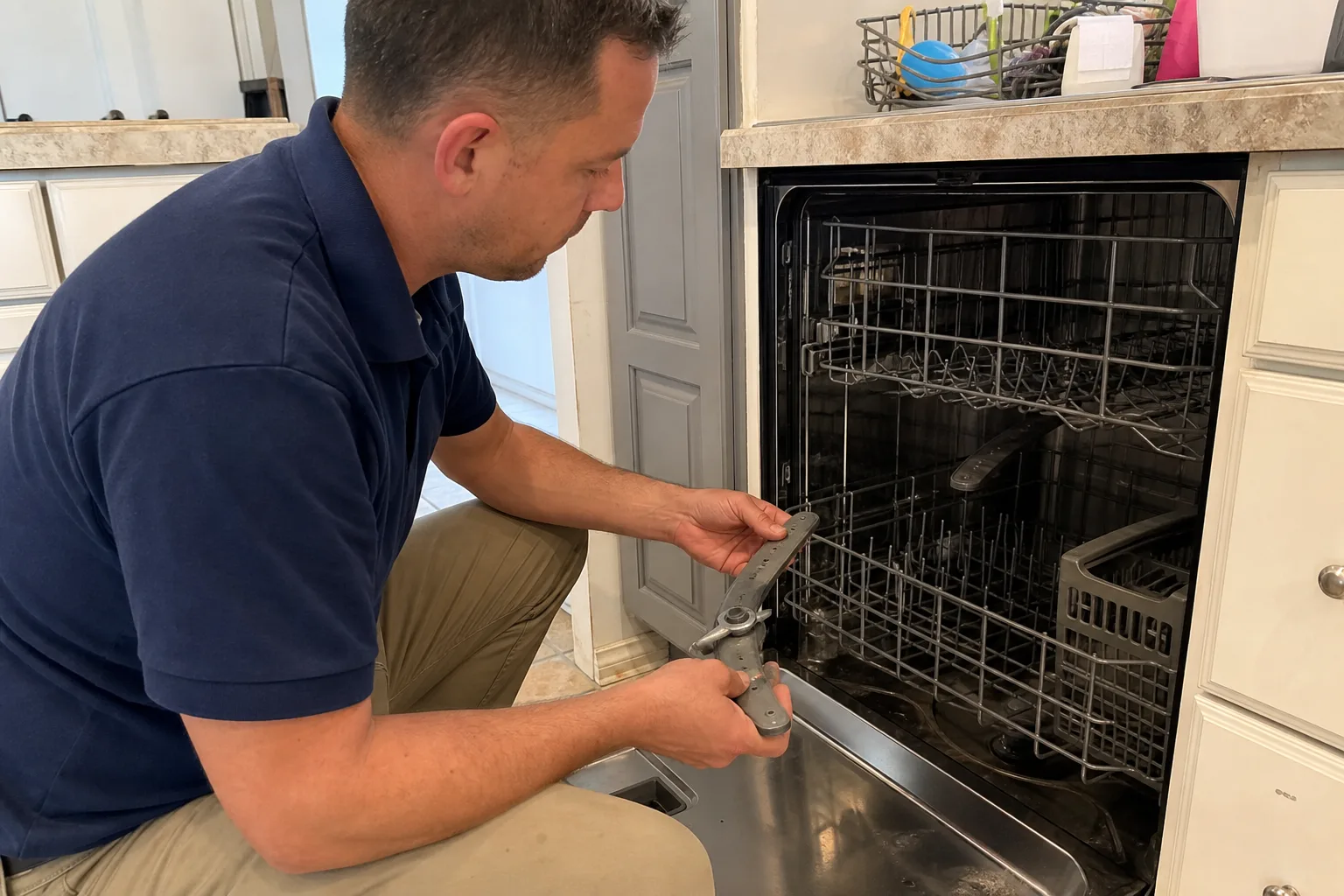
The spray arms are hollow tubes with a dozen or more small nozzles. Water passes through under pressure but never scrubs their inner walls, so grease and food build a film there over years — sealed inside, beyond the reach of any vinegar poured into the tub.
How to tell: the smell is strongest in the first seconds of a cycle, when the arms pressurise. Dishes on one side may also come out less clean as nozzles narrow.
Fix: unclip the lower arm and unthread the upper one. Soak both in warm water and white vinegar for thirty minutes, push a toothpick through every nozzle, then rinse, refit, and check both spin freely by hand.
2 A Clogged Drain Air Gap at the Sink DIY
The one almost everybody misses, because it is not part of the dishwasher. The air gap is the small chrome or plastic cylinder beside your kitchen faucet. It stops dirty sink water siphoning back into the machine, and every drop of drain water passes through it.
How to tell: the smell is noticeable at the sink itself, not only with the door open. Water burping out of the air gap during a drain cycle means it is blocked.
Fix: twist the cap off, lift out the inner cover, pull out any trapped debris, and rinse the chamber. Five minutes, and when this is the source it clears the odour completely. Not every home has one — some installs use a high loop instead.
3 A Knockout Plug Left In on a New Install Professional
Every garbage disposal ships with a knockout plug sealing the inlet where a dishwasher drain hose connects, and it must be punched out before the hose goes on. If it is missed, water backs up and turns stagnant — exactly the sour smell people blame on the dishwasher.
How to tell: the odour started within days of a new dishwasher going in, and standing water is usually left in the tub after a cycle.
Fix: the drain connection has to be taken apart, the plug removed, and the hose refitted. Dishwasher installation is the one installation service we offer, so we can correct a rushed install in one visit.
4 Grime Under the Door Gasket DIY
The rubber seal around the door sits above the water line, so wash water never reaches it. Food splashes settle in its folds and stay damp between cycles — ideal for the bacteria that cause odour.
Fix: wipe the seal and the lip below it with a damp cloth after each wash, pulling the folds gently open. Once a month use warm soapy water. Never bleach a rubber seal — it hardens and eventually causes leaks.
One Symptom That Means It Is Not the Dishwasher
A sharp sulfur or rotten-egg smell behaves differently: it is there whether or not a cycle has just run, and worsens when the kitchen sits unused. That points to a drain line venting problem behind the appliance, letting sewer air push back up the drain. Cleaning will not touch it — a technician or plumber needs to trace the vent.
Work Through This in Order:
Skip the bleach. It damages the rubber door seal and can pit a stainless steel tub. White vinegar, citric acid, or a purpose-made dishwasher cleaner do the same job without the damage.
What Each Fix Costs
| Source of the Smell | DIY Possible? | Pro Repair Cost |
|---|---|---|
| Biofilm in the spray arm nozzles | Yes — free | Not needed |
| Clogged drain air gap | Yes — free | Not needed |
| Grime under the door gasket | Yes — free | Not needed |
| Knockout plug left in on install | No | $150 – $250 |
| Drain line venting problem | No | $180 – $350 |
Prices include parts and labour. We charge an $89 Diagnostic — Waived with Repair, with a 90-day warranty on parts and labour.
Limited-time offer: $40 OFF any repair. Book online or call (437) 747-6737.
How to Keep the Smell From Coming Back
Leave the door ajar for twenty to thirty minutes after each cycle so the tub dries. Scrape plates rather than pre-rinsing — modern detergents need some soil to work against. Run a hot cycle weekly, since short eco cycles never get the tub hot enough to break down grease. Our dishwasher maintenance guide has the full schedule.
When to Call a Technician
Book a visit if water still stands in the tub after a cycle, if the smell is sulfur rather than sour, or if the odour appeared right after a new dishwasher was installed — all three point to a drain problem.
We service Toronto, North York, Scarborough, Etobicoke, Mississauga, Brampton, Vaughan, Richmond Hill, Markham, Oakville and the surrounding GTA, Monday to Saturday 8am–8pm and Sunday 9am–6pm.
Frequently Asked Questions
Because the filter is only one of four places odour collects. Cleaning it does nothing for biofilm inside the spray arm nozzles, a clogged air gap at the sink, or grime under the door gasket. Those three are untouched by a filter clean and a single vinegar cycle.
The air gap is the small chrome or plastic cylinder on the countertop beside the kitchen faucet, and it stops dirty sink water siphoning back into the dishwasher. Twist off the cap, lift out the inner cover, pull out trapped food debris, and rinse the chamber. It takes about five minutes.
Yes, and it is a common oversight. A garbage disposal ships with a knockout plug sealing the dishwasher drain inlet. If the installer does not punch it out before connecting the drain hose, water sits stagnant. Dishwasher installation is the one installation service we offer, and this is a quick fix.
A sulfur or rotten-egg smell is different from ordinary food odour and usually is not coming from the dishwasher at all. It points to a drain line venting problem in the plumbing behind the appliance, letting sewer air push back up the drain. That needs a technician or plumber to trace.
Unclip the lower arm and unthread the upper one. Soak both in warm water with white vinegar for about half an hour, then push a toothpick through each nozzle to clear the softened film and rinse under a strong tap. Refit them and confirm both spin freely by hand.
Most causes cost nothing to fix yourself — cleaning the spray arms, air gap, and door gasket takes under an hour in total. When the cause is a drain connection done wrong or a venting problem, professional repair runs $150 to $350 including parts and labour, plus our $89 Diagnostic, waived with repair.